How to Customize a Photo Booth for Your Brand
The Complete Guide to OEM/ODM Manufacturing
Want a photo booth that truly represents your brand? This guide covers the full OEM/ODM customization process – from hardware and enclosure design to software interface and mass production. Includes software customization options.
If you’re looking to create a custom photo booth for your rental business or brand, here’s the short answer: OEM and ODM services let you design everything from the enclosure shape and color to the software interface and features. You can start with a sketch or modify an existing design, and a full‑service manufacturer like PhoPrint will bring it to life – even for a single unit.
This guide walks you through the entire customization journey, from hardware selection to software personalization, so you know exactly what to expect before you start.
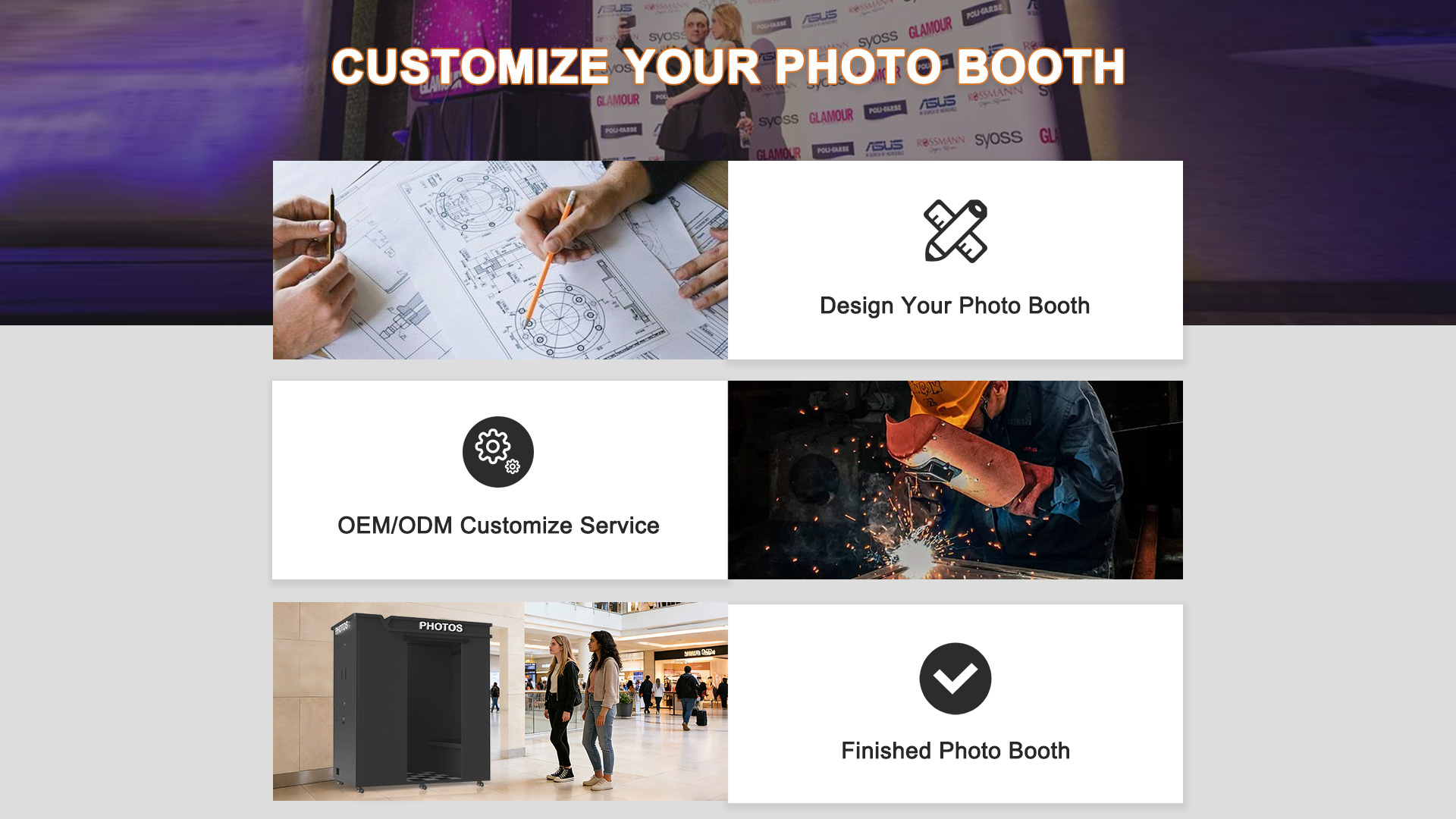
Why Customize Your Own Photo Booth?
Off‑the‑shelf photo booths work for many operators. But if you want to stand out in a crowded market – whether it’s weddings, corporate events, or retail spaces – a custom booth becomes your brand’s signature.
Benefits of custom photo booth manufacturing:
-
Unique branding: Your logo, colors, and shape become instantly recognizable.
-
Tailored features: Add specific props, payment systems, or social media integrations.
-
Competitive edge: A one‑of‑a‑kind booth commands higher rental rates.
-
Perfect fit: Match the booth to your typical venues (compact for tight spaces, large for high‑traffic areas).
Popular custom photo booth ideas include heart‑shaped enclosures, vintage wooden designs, LED‑lit open booths, and even 360 platforms with branded wraps.
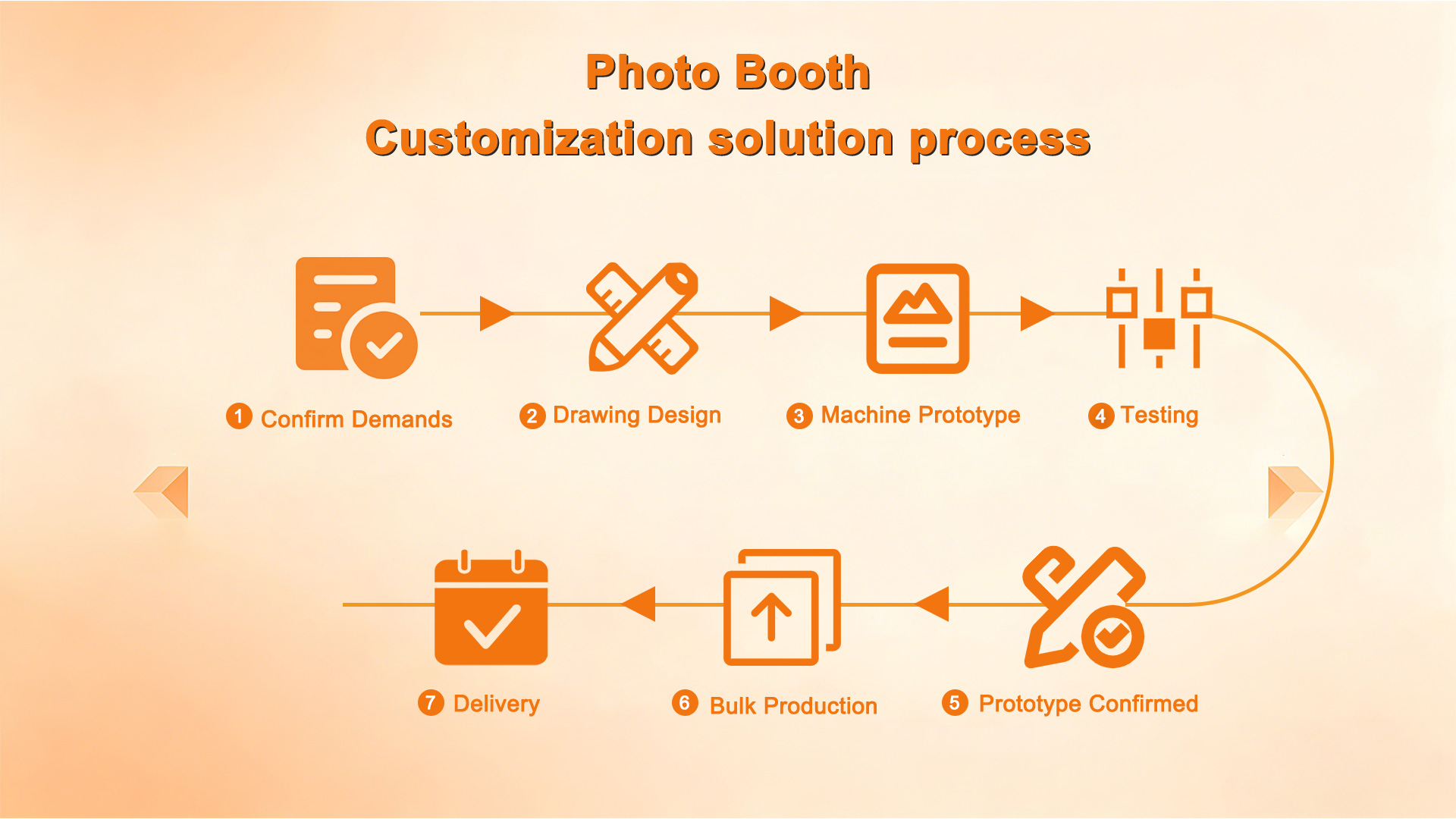
The Customization Process: From Sketch to Delivery
Customizing a photo booth isn’t magic – it’s a structured process. Here’s what a typical OEM/ODM photo booth project looks like, step by step.
Step 1: Confirm Demands
You start with a concept. It could be a rough sketch, a photo of a booth you like, or just a list of features you need. The manufacturer will help you clarify:
-
Booth type: Open‑air, enclosed, mirror, 360, or slow‑motion Glambot.
-
Hardware: DSLR camera, iPad, or industrial printer.
-
Dimensions and materials: Wood, acrylic, metal, or fabric.
-
Software requirements: Touchscreen interface, AI filters, social media printing, payment integration, or even professional ID photo capabilities.
At this stage, you’ll also decide whether you want an OEM service (manufacturer builds exactly to your drawings) or ODM service (manufacturer designs based on your needs and their expertise).
Step 2: Drawing & 3D Design
Engineers create detailed 2D drawings and 3D models. They consider engineering feasibility, aesthetics, and cost. You’ll see renderings with realistic materials, lighting, shadows, and surface textures.
Pro tip: Request a 360‑degree virtual model so you can inspect every angle before cutting any material.
Step 3: Machine Prototype
A physical prototype is built – usually one unit. This is your chance to test the weight, sturdiness, and user experience. You can sit inside (for enclosed booths), test the touchscreen height, and check print quality.
Step 4: Testing & Adjustments
The prototype goes through rigorous testing: software stability, printer reliability, camera focus, lighting consistency, and transport durability. You provide feedback, and the manufacturer tweaks the design.
Step 5: Prototype Confirmed
Once you approve the final prototype, the design is frozen. All specifications are documented – from screw types to wire routing.
Step 6: Bulk Production (or Single Unit)
Even if you only need one custom booth, many manufacturers (including PhoPrint) offer low minimum order quantities. Production typically takes 2–4 weeks depending on complexity.
Step 7: Delivery & After‑Sales
Your custom booth is packaged securely and shipped. If the manufacturer has local warehouses (e.g., in the EU or US), you can avoid long sea freight and customs delays.
Hardware & Enclosure Customization Options
You can customize almost every physical component of a photo booth.
Enclosure Design
-
Shape: Classic rectangle, round, heart‑shaped, foldable, or column‑style.
-
Material: Wood (painted or natural), acrylic, aluminum, or fabric covers.
-
Finish: Matte, glossy, textured, or with LED edge lighting.
-
Size: Compact portable units or large walk‑in booths.
Hardware Selection
-
Camera: Choose between iPad cameras, consumer DSLRs (Canon/Nikon), or industrial DSLRs.
-
Printer: Dye‑sublimation, inkjet, or ZINK (zero‑ink) printers.
-
Touchscreen: Sizes from 10″ to 32″, indoor or outdoor brightness.
-
Lighting: Ring lights, softboxes, or RGB LED strips with color‑changing effects.
-
Accessories: Green screen backdrop, props box, carrying flight case, payment terminal.
Example: PhoPrint’s Customization Capabilities
PhoPrint offers OEM/ODM services even for single‑unit orders. Their team handles hardware selection, front‑end appearance, structural modifications, and peripheral function docking. You can modify their existing enclosures (like the portable DSLR booth or enclosed photo booth series) or start from a blank slate.
Software Customization: Make the Booth Truly Yours
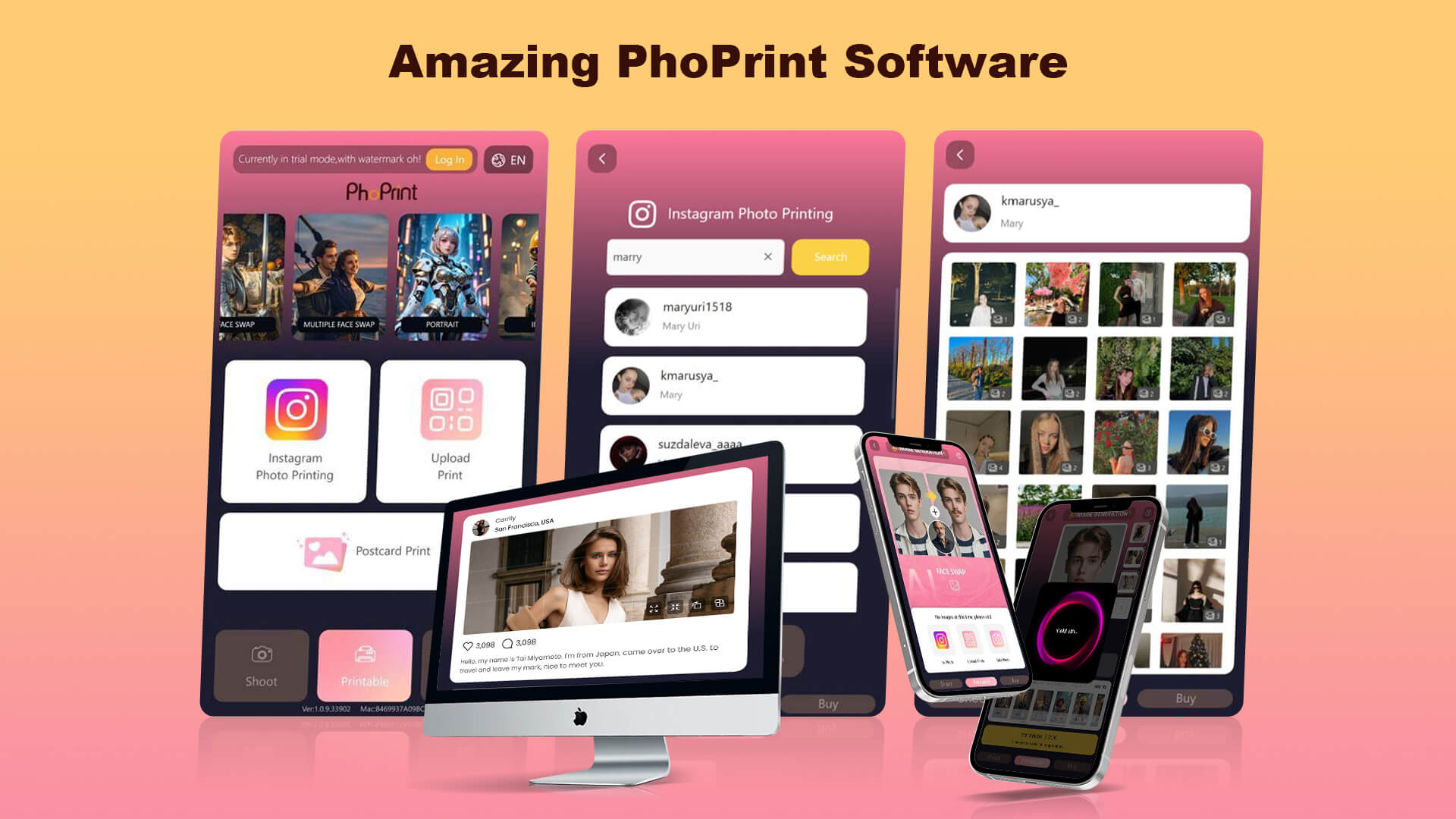
Hardware is only half the story. The software defines the user experience and can become your biggest competitive advantage. If you need a photo booth software solution that goes beyond generic apps, you have two options:
-
Modify an existing, proven software platform (faster, lower cost)
-
Design a completely custom interface (unique branding, tailored workflows)
What You Can Customize in Software
-
Branding: Add your logo, brand colors, fonts, and custom animations to every screen.
-
Photo templates: Design print layouts with event names, dates, or sponsor logos.
-
Print modes: Offer classic instant prints, AI‑enhanced filters, Instagram photo printing, or postcard templates.
-
Sharing options: Integrate WhatsApp, email, SMS, QR code downloads, or direct social media posting.
-
Payment integration: Support coin, bill, credit card, or mobile payments – fully configurable pricing per shoot or print.
-
Special features: Green screen, AI magic effects, professional ID photo mode (visa/passport compliance), or boomerang loops.
-
Management suite: Remote device monitoring, template management, event scheduling, and real‑time revenue tracking.
Custom Software Development Timeline
Based on real project experience, a typical custom photo booth software project takes 30–45 business days from initial discussion to delivery. This includes:
-
Requirement analysis and UI/UX design (1–2 weeks)
-
Development and iterative feedback (3–4 weeks)
-
Testing, debugging, and final deployment (1 week)
Larger or highly complex features (e.g., custom AI models, integration with third‑party APIs) may extend the timeline, but most rental‑focused customizations fit within the 30‑45 day window.
Why Choose a Manufacturer with an In‑House R&D Team
When you customize software, you’ll inevitably need changes – to the user flow, payment logic, or hardware drivers. Manufacturers that outsource software development can’t respond quickly.
Look for an in‑house team proficient in:
-
Python, Java, HTML5, embedded systems
-
Big data algorithms and peripheral device integration
-
Front‑end UI/UX and back‑end management systems
PhoPrint, for example, has dozens of software and hardware development engineers. They build and maintain their own PhoPrint All‑in‑One Photo Booth Software, which includes AI photography, Instagram print, ID photo solutions, remote management, and flexible payment setups. Because they own the code, they can modify it to your exact needs – or build something entirely new – without waiting on a third party.
Long‑tail keyword examples: custom photo booth software development, white label photo booth app, AI photo booth software, Instagram photo printing solution, professional ID photo booth software.
| Service | What It Means | Best For |
|---|---|---|
| OEM (Original Equipment Manufacturer) |
You provide complete design specs (drawings, dimensions, materials). The manufacturer just builds it. | You already have a detailed design and just need production. |
| ODM (Original Design Manufacturer) |
The manufacturer helps design based on your requirements and then produces it. | You have an idea but need engineering help to make it real. |
Cost & Minimum Order Quantities (MOQ)
One common myth: you need to order 100+ units to get a custom booth. Not true. Many manufacturers now offer low MOQ customization – PhoPrint even accepts your customization needs for a single unit.
-
Single custom unit (hardware + enclosure): $5,000 – $8,000 depending on complexity.
-
Small batch (5–10 units): Lower per‑unit cost, starting around $4,000 each.
-
Bulk order (50+ units): Approximately $3,000 per unit.
How much does custom software cost?
Pricing starts at $1,000 and can go up to $10,000, depending on your feature requirements (e.g., branded UI, payment integration, AI filters, Instagram printing, or ID photo modes).
Always ask for a breakdown of what’s included: hardware components, software license, warranty, and delivery.
Real‑Life Example: Bringing a Photo Booth Idea to Life
Imagine you want a heart‑shaped, enclosed photo booth for Valentine’s Day pop‑ups. Here’s how the ODM process would work:
-
Demand confirmation: You specify size (seats two), material (pink acrylic with LED hearts), camera (DSLR), printer (dye‑sub), and software (GIF creation + WhatsApp share).
-
Drawing: Engineers produce 3D renderings showing the heart shape, lighting effects, and surface textures.
-
Prototype: A single unit is built. You test it at a small event.
-
Feedback: You ask for a stronger printer mount and a QR code for instant downloads.
-
Software customization: You request a branded touchscreen interface with a custom postcard template and coin payment option. The manufacturer’s software team delivers it in 35 business days.
-
Final production: After approval, your custom booth is manufactured and shipped within 4 weeks.
The result? A unique attraction that drives social media buzz and premium rental fees.
Why Choose a Manufacturer with In‑House R&D?
When you customize a photo booth, you’ll inevitably need changes – to hardware, software, or both. Manufacturers that outsource design or software can’t respond quickly.
Look for:
-
In‑house software team (Python, Java, HTML5, embedded systems)
-
In‑house structural engineers (for enclosure and mechanical parts)
-
In‑house firmware engineers (for peripheral devices like printers and payment terminals)
PhoPrint, for instance, has dozens of R&D engineers who handle everything from big data algorithms to front‑end appearance customization. PhoPrint Photo Booth Software already includes AI magic effects, Instagram photo printing, ID photo solutions, remote management, and flexible payment integration. That means when you ask for a weird feature – like a thermal printer that also cuts custom shapes, or a branded interface with a unique payment flow – they can actually build it.
FAQ: Custom Photo Booth Hardware & Software
- Can I order just one custom photo booth?
Yes – many manufacturers, including PhoPrint, offer OEM/ODM services even for a single unit. - How long does the whole process take?
Hardware + enclosure: typically 6–10 weeks from design to delivery. Software customization adds 30–45 business days, depending on complexity. - Do I need to know 3D design software?
No. A rough sketch or reference photos are enough. The manufacturer’s engineers will create professional drawings. - Can I customize the software myself?
Some manufacturers provide a web‑based template editor for basic branding. For deeper changes (e.g., custom payment flows, AI filters, or Instagram print integration), you’ll need their development team. - What about warranty on custom booths?
Most reputable manufacturers offer a 1‑year warranty on hardware and lifetime support for software issues. - How much does custom software cost?
Starts around $1,000 for white‑label modifications of existing software. A fully custom interface can run up to $10,000 depending on features.
Your Brand, Your Booth, Your Software
Customizing a photo booth isn’t just about getting a unique look – it’s about creating an experience that matches your brand identity. Whether you’re a rental business wanting to stand out or a company building an interactive marketing tool, the OEM/ODM route gives you full control over hardware, enclosure, and software.
Your next step: Gather your ideas – sketches, photos, or just bullet points – and reach out to 2–3 manufacturers. Ask about their customization process, minimum order quantities, and R&D capabilities. A good partner will walk you through each of the seven steps without pushing a large upfront order.
PhoPrint specializes in custom photo booth manufacturing – from single prototypes to bulk orders. Their in‑house R&D team handles hardware, enclosure design, and software development. With the PhoPrint All‑in‑One Photo Booth Software, you can start from an existing platform or build something entirely new. Typical software customization takes 30–45 business days from concept to deployment.